
Convenience is no longer just a perk. It is an operational efficiency that directly impacts productivity, focus and employee experience.
As personal and professional demands continue to intensify, workplaces that reduce everyday friction help employees make better use of their time and energy throughout the day.
Today, the most effective workplace environments are defined less by amenities themselves and more by how much time they give back.
Where Time Is Reclaimed in the Workday
Small efficiencies add up quickly when they are part of the daily routine. Across many workplace environments, time savings can be measured in clear, practical ways.
- On-site food services: 20 – 40 minutes saved daily by eliminating travel, wait times and off-site meal trips. For example, at UCI Research Park employees can visit Herb & Ranch, the modern micro-food hall offering five stations for breakfast and lunch from award-winning chef Brian Malarkey, or MoonGoat Coffee for an array of espresso beverages and breakfast sandwiches.
- Walkable retail and dining: 10 – 15 minutes saved daily by reducing driving, parking and traffic-related errands. At Santa Clara Square, daily needs are integrated into a fully walkable district. Employees can step out for quick errands, grocery shopping or meals without needing a car, reducing midday travel entirely.
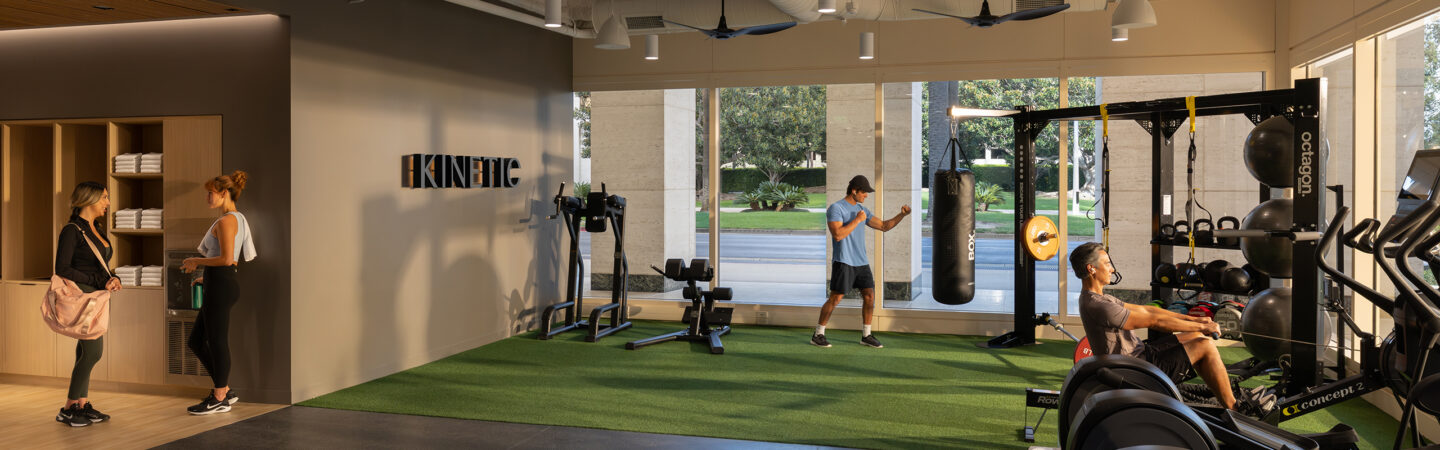
- On-site fitness centers: 30 – 60 minutes saved daily by removing the need for a separate gym commute and transition time. For example, employees at Jamboree Center benefit from a two-story state-of-the-art fitness center with modern equipment and resort-style locker rooms, making it easy to work out before, during or after the workday.
Why These Small Gains Matter
Individually, these improvements may appear incremental. Together, they can return more than an hour to the workday.
Over time, that reclaimed time compounds into meaningful organizational impact.
For employees, it means fewer interruptions and more time for focused work.
For employers, it supports better productivity, stronger engagement and a more consistent workplace experience even during high demand periods.
Convenience as a Strategic Advantage
The most effective workplace strategies increasingly recognize that productivity is shaped not only by how people work but also by how much friction they encounter while working.
When routine tasks are easier to complete, employees experience:
- Greater focus and fewer interruptions
- Reduced cognitive load throughout the day
- Improved consistency in work output
- A more supportive and sustainable work experience
In this context, convenience is not about perks. It is about enabling better performance through thoughtful workplace design.
The Shift in Workplace Expectations
As expectations around flexibility and workplace value continue to evolve, organizations are rethinking how the workplace supports daily life.
Convenience is becoming less about amenities themselves and more about designing environments that help employees save time, reduce friction and stay focused on high value work.
The result is a workplace that performs better because the people in it can too.