

The right spaces and amenities can strengthen talent development by creating opportunities for leadership growth
Is your office simply where people work or the place where your next generation of leaders develops?
Tomorrow’s leaders need opportunities to build relationships, learn from experienced colleagues, solve complex problems, and gradually take on greater responsibility.
The physical workplace can help make those experiences part of everyday work. Collaboration areas can bring people together around shared challenges. Meeting spaces can support mentorship and knowledge-sharing. Informal gathering areas can create opportunities for connections that extend beyond immediate teams and the “casual collisions” that spark new ideas.
For organizations preparing for their next stage of growth, these interactions matter. They help emerging leaders build the judgment, relationships, and practical experience needed to take on greater responsibility.
Here are three ways to make the workplace a more active part of your leadership pipeline.
1. Connect: Build Organizational Relationships
Future leaders need more than strong connections within their immediate teams. They need relationships across functions, levels, and areas of expertise — and the physical workplace can naturally foster them.
Put your workplace to work:
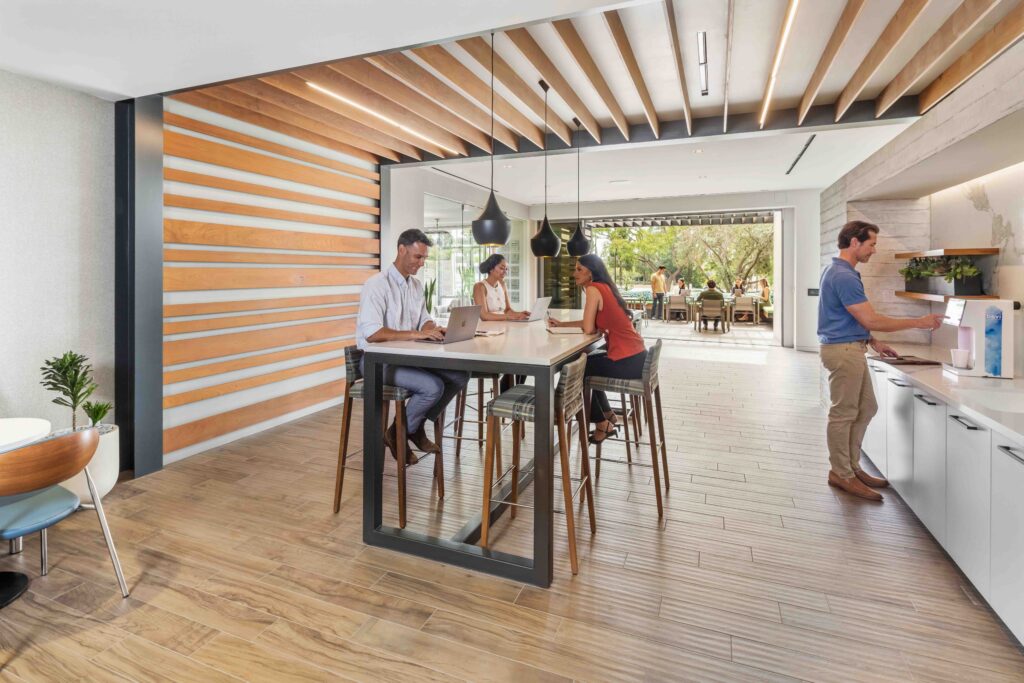
- Use shared lounges, cafés, and gathering areas as natural points of connection for employees across teams and departments.
- Host small-group conversations in collaborative spaces where emerging leaders can exchange ideas with senior leaders outside their direct reporting structure.
- Make room for informal conversations before and after meetings by leveraging pre-function spaces and lounges, rather than moving immediately from one scheduled interaction to the next.
The leadership payoff: Broader networks give emerging leaders greater organizational context, access to expertise, and the relationships they’ll need to influence and lead across the organization.
2. Coach: Make Experience Transferable
Some of the most valuable leadership lessons happen in the moments around the work—not in a formal training session. Reflection, feedback, and discussion help turn those experiences into lasting lessons, and the workplace can support this process by providing environments for both formal coaching and informal knowledge-sharing.
Put your workplace to work:
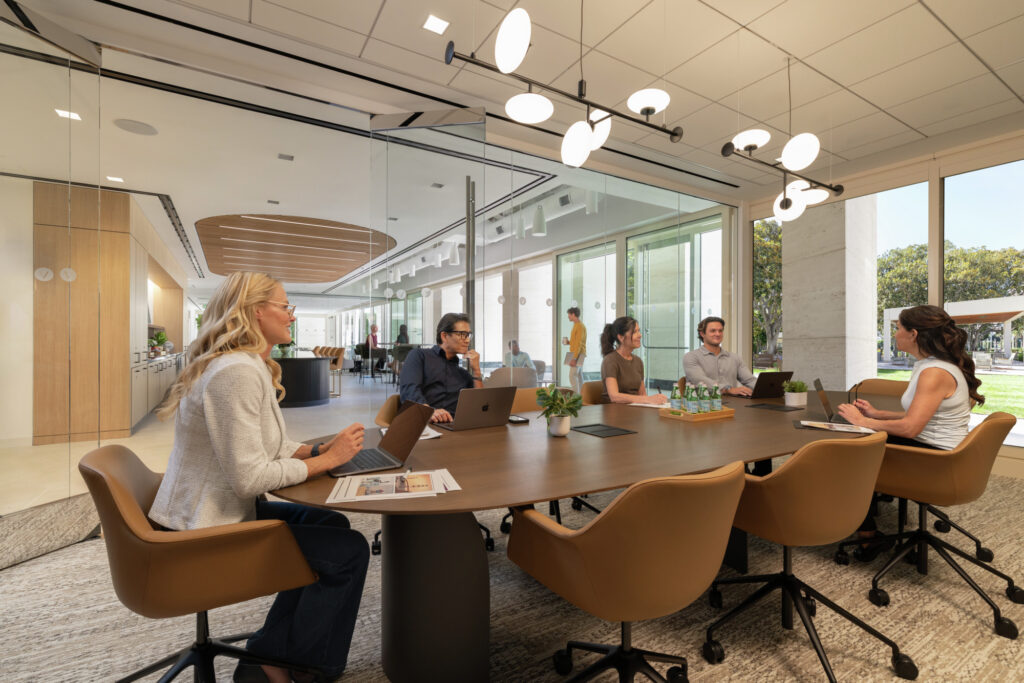
- Follow important discussions with a short debrief in a nearby meeting or collaboration space.
- Establish recurring coaching conversations between senior leaders and developing talent in settings that encourage focused, candid discussion.
The leadership payoff: Emerging leaders develop judgment, communication skills, and organizational awareness by seeing leadership in action and learning how to apply those lessons themselves.
3. Collaborate: Develop Judgment Through Shared Challenges
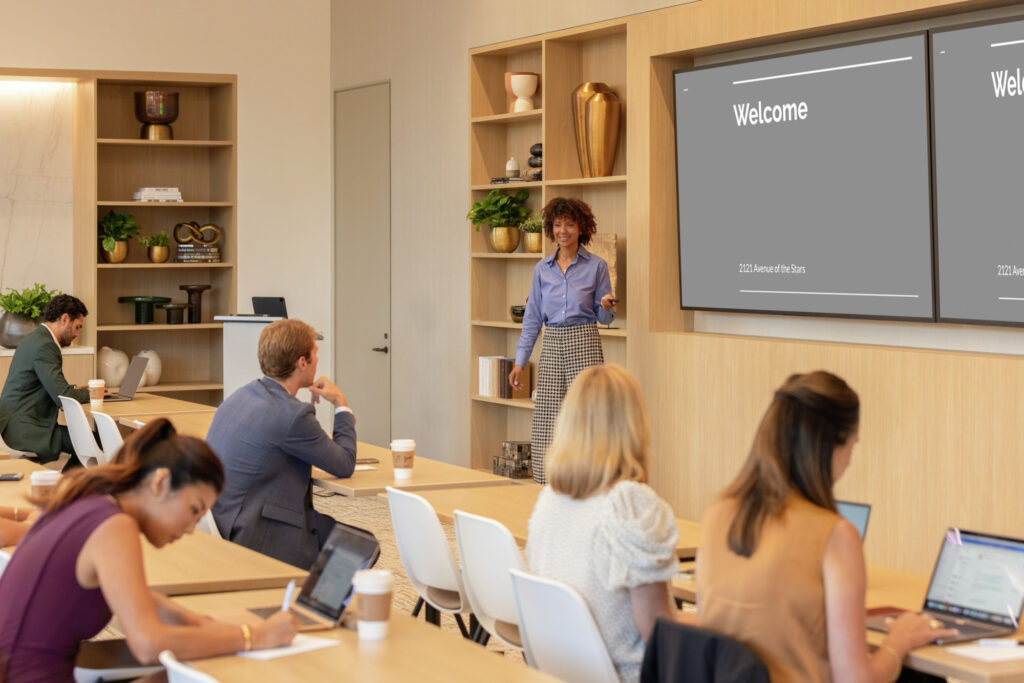
Flexible collaboration areas give teams room to brainstorm and exchange ideas. Project spaces can support sustained work on complex challenges. Well-equipped meeting rooms provide settings for focused discussion, decision-making, and bringing different perspectives together. The opportunity is to match the space to the work — and bring the right people together around a meaningful outcome.
Put your workplace to work:
- Bring cross-functional teams together in project spaces where they can work through ideas, test solutions, and make progress on shared priorities.
- Use whiteboards, shared displays, and other visual tools to make ideas tangible and encourage participation from different perspectives.
The leadership payoff: Employees strengthen their ability to solve problems, influence others, navigate disagreement, and make decisions in complex, collaborative environments.
Make Your Workplace an Asset in Leadership Development
A strong leadership pipeline is built through experience: relationships developed over time, knowledge shared between colleagues, challenges solved together, and opportunities to take on greater responsibility.
The physical workplace can help make those experiences part of everyday work. When collaboration areas, meeting spaces, and shared amenities are used to encourage meaningful interaction and real responsibility, they become more than workplace features. They become resources for developing talent.
On-site amenities and the surrounding neighborhood act as an expanded footprint, offering employees multiple settings to connect and collaborate. When these spaces, together with the office, are intentionally activated, organizations can maximize their workplace impact and build tomorrow’s capabilities today.